


7 Best Ways to Pay for Long-Term Care in Texas (2026)

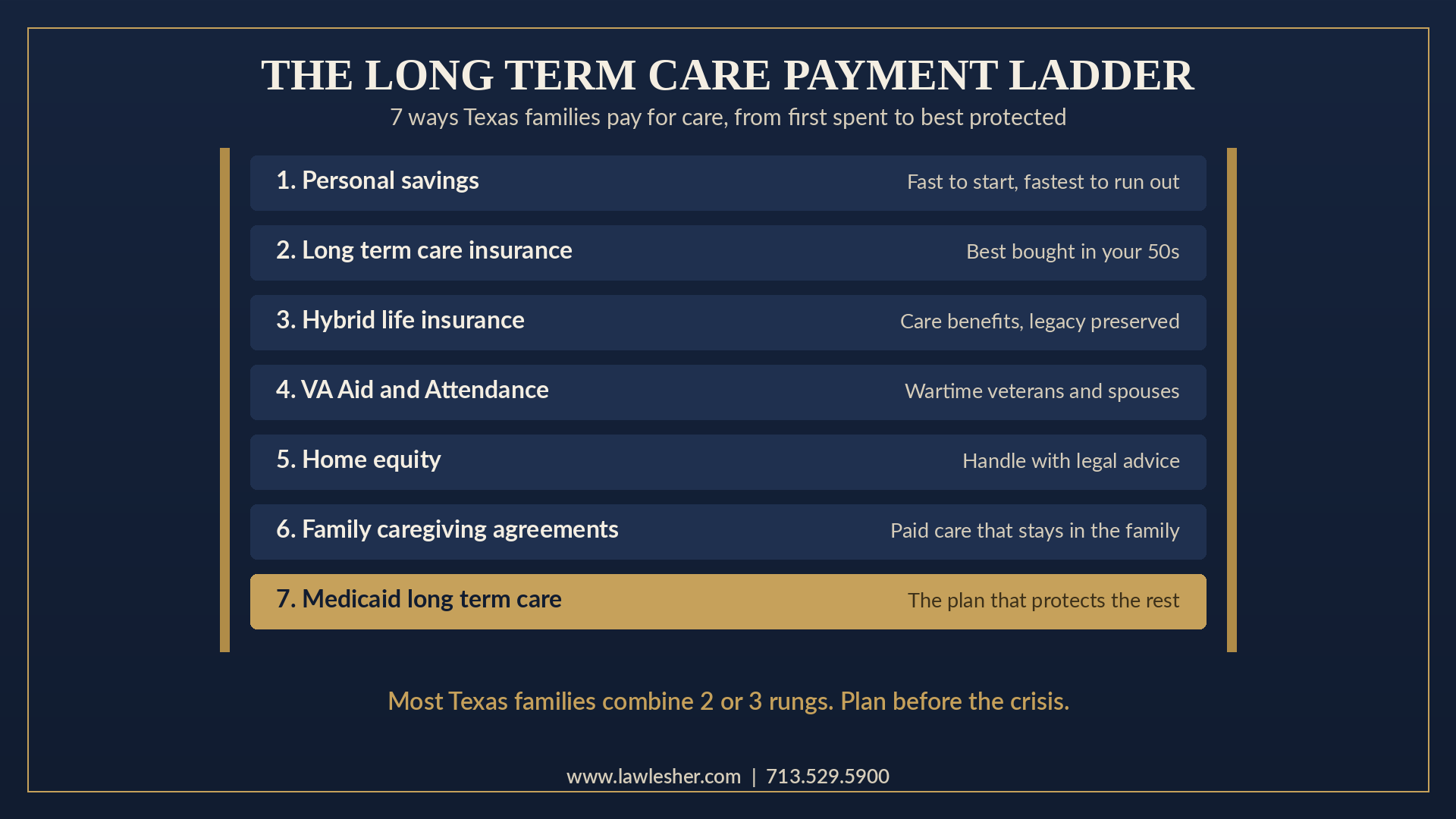
TL;DR: Texas families pay for long-term care in seven main ways: personal savings, long-term care insurance, hybrid life insurance policies, VA Aid and Attendance, home equity, family caregiving agreements, and Medicaid long-term care benefits. Most families end up combining two or three, and Medicaid planning protects the rest.
Every week, a family sits in my office and asks the same question: how are we supposed to pay for this?
A parent needs care, the numbers feel impossible, and nobody planned for it.
Here is the honest answer, option by option, so you can see the full menu before you spend down a lifetime of savings.
1. Personal Savings and Retirement Income
- The default plan for most families, and the fastest to run out
- Nursing home care in the Houston area commonly runs $6,000 to $9,000 per month
- Works best as a bridge while you set up the smarter options below
- Home care can cost much more!
2. Long-Term Care Insurance
- Excellent if purchased in your 50s or early 60s; expensive or unavailable after health changes
- Check existing policies for elimination periods, daily benefit caps, and inflation riders
- Already own a policy? Bring it to your planning meeting; it changes the whole strategy
3. Hybrid Life Insurance With Care Riders
- Life insurance policies that let you spend the death benefit on care while living
- Popular because unused benefits still pass to your family
- Underwriting is easier than traditional long-term care insurance
4. VA Aid and Attendance
- A pension enhancement for wartime veterans and surviving spouses who need help with daily living
- Often missed: many Houston families never learn their parent qualifies
- Can stack with other strategies on this list
5. Home Equity
- Reverse mortgages and sale proceeds can fund care, with real tradeoffs
- In Texas, your homestead receives special protection in Medicaid planning; selling it at the wrong time can create problems
- Talk to an elder law attorney before touching home equity for care costs
6. Family Caregiving Agreements
- A written, paid caregiver contract with an adult child keeps money in the family
- Done correctly, payments are legitimate and Medicaid compliant
- Done informally, the same payments can look like gifts and trigger penalties later
7. Medicaid Long Term Care Benefits
- The payer of last resort for most families, and the one that requires the most planning
- Texas has strict income and asset limits, a five-year lookback on gifts, and estate recovery rules
- Tools like Miller trusts for income and spousal protections exist, and they work best before a crisis
Which Option Is Best for Your Family?
The best way to pay for long-term care in Texas is a layered plan: insurance or VA benefits where available, careful use of savings, and early Medicaid planning to protect the healthy spouse and the family home.
The worst plan is writing checks until the money is gone. That is the plan most families are on by default.
FAQ
How much does a nursing home cost in Houston?
Most Houston-area nursing homes cost between $6,000 and $9,000 per month, and memory care often costs more. Costs rise every year.
Does Medicare pay for long-term care in Texas?
No. Medicare covers up to 100 days of skilled rehabilitation after a hospital stay. It does not pay for ongoing custodial nursing home care or for ongoing custodial care at home.
Can Medicaid take your house in Texas?
The Texas homestead is generally protected during your lifetime, and the state may file an estate recovery claim after death. Planning ahead can protect the home for your family.
When should I start Medicaid planning in Texas?
Five years before you need care is ideal because of the lookback period. Planning is still possible in a crisis; the earlier you start, the more you protect.
Every family's situation is different.
Come see us at our Kirby Drive office or virtually, and we will map the options together.
Call 713-529-5900. Law Office of Christina Lesher, PC, 5615 Kirby Dr, Suite 412, Houston, TX 77005.