




6 Ways an Inheritance Can End Your Child's Medicaid (and How to Prevent Each One)

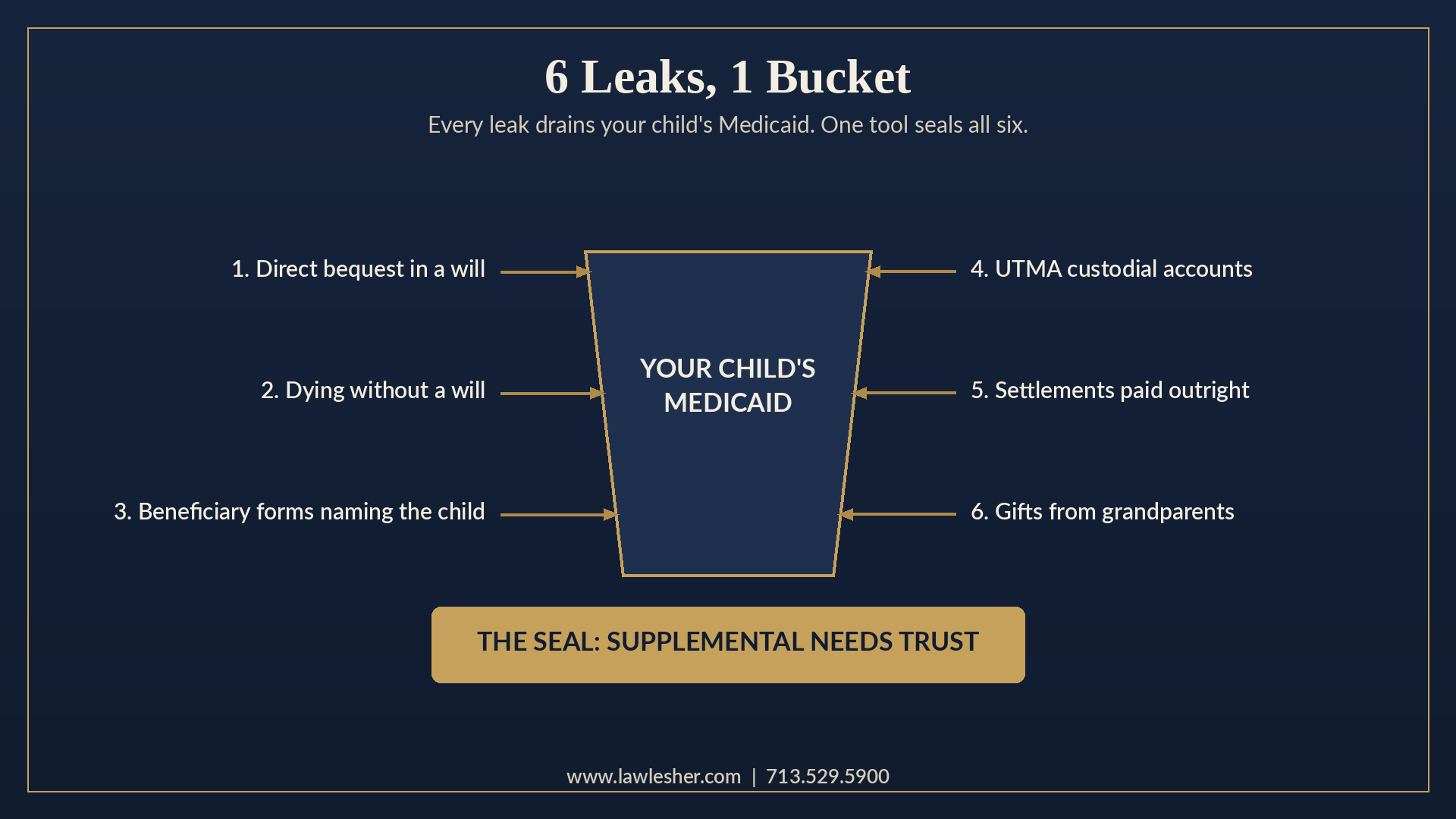
TL;DR: The six inheritance mistakes that end a child's Medicaid are: a direct bequest in a will, dying without a will, naming the child on life insurance or retirement accounts, UTMA custodial accounts, court settlements paid outright, and gifts from grandparents. Every one is preventable with a supplemental needs trust and coordinated beneficiary designations.
Nobody in these stories did anything wrong on purpose. Every mistake below was an act of love with the wrong paperwork. Here are the six I see in my Houston practice, each with its fix.
1. A Direct Bequest in a Will
The will says "to my daughter, equally with her brothers." The gift arrives, and Medicaid and Social Security eligibility ends.
Fix: a supplemental needs trust written into the will or trust that receives her share instead
2. Dying Without a Will
Texas intestacy law hands the child a share automatically, with no protective wrapper
Fix: both parents execute wills with SNT provisions; this is the core reason special needs parents cannot rely on generic online or Chat GPT wills
3. Life Insurance and Retirement Accounts Naming the Child
Beneficiary designations override the will; a policy naming the child pays the child
Fix: audit every designation and point them to the trustee of a supplemental needs trust.
4. UTMA and Custodial Accounts
Money in the child's name counts against the child at 21.
Fix: redirect savings into an ABLE account or first party Supplemental Needs Trust before adulthood
5. Settlements and Court Awards Paid Outright
Personal Injury settlements or child support paid directly to create the same problem at a larger scale
Fix: a first-party special needs trust holds the award or support to preserve benefits
6. Generous Grandparents
Grandparents' wills and gifts routinely name grandchildren directly, and nobody checks
Fix: one family conversation plus trust supplemental for the family gifts.
FAQ
Does an inheritance count against Medicaid in Texas?
Yes. Assets inherited outright count toward eligibility limits and can end coverage until spent down. Trust planning prevents this.
Can grandparents leave money to a special needs grandchild?
Yes, safely, by naming the child's supplemental needs trust instead of the child. The gift then helps without harming benefits.
What happens to a child's Medicaid at age 18?
Eligibility is reassessed under adult SSI rules, and money in the child's own name counts. The years before 18 are the planning window.
One meeting can find every leak in your family's plan. Call 713-529-5900 and bring your beneficiary statements.
About the Author:
Christina Lesher is a Houston elder law attorney with over 25 years of experience in elder care, social work, and legal services. Since 1997, she has helped families navigate Medicaid planning, estate planning, probate, guardianship, and special needs planning. Drawing on her personal experience caring for her grandfather with dementia, Christina combines legal knowledge with compassionate, hands-on guidance to help Texas families protect their loved ones and plan for the future.